The Suthra Punjab Program is not just a cleaning drive. It is a province-wide governance and management system that uses public private partnerships, digital monitoring and clear contracts to deliver waste services across Punjab.
ستھرا پنجاب صرف ایک صفائی مہم نہیں بلکہ ایک مکمل نظام ہے جس کے تحت پنجاب بھر میں کچرا اٹھانے، سڑکوں کی صفائی اور ویسٹ مینجمنٹ کے لیے سرکاری اور نجی شراکت، ڈیجیٹل مانیٹرنگ اور واضح معاہدوں کے ذریعے کام کیا جاتا ہے۔
- Coverage across all 36 districts and more than 140 tehsils in Punjab.
- Performance-based PPP contracts with private waste management companies.
- Digital dashboards, GPS tracking and apps for monitoring and citizen feedback.
This page explains how Suthra Punjab is structured, who is responsible at each level and how citizens can hold the system accountable. It is an independent informational overview, not an official government publication.
1. Program Structure Overview | پروگرام کا بنیادی ڈھانچہ
Suthra Punjab operates as a large integrated waste management system across Punjab. Official program material describes a province-wide model that serves over 130 million people in roughly 40 districts, 141 tehsils and more than 220 local governments, with standardized door-to-door collection and disposal services.
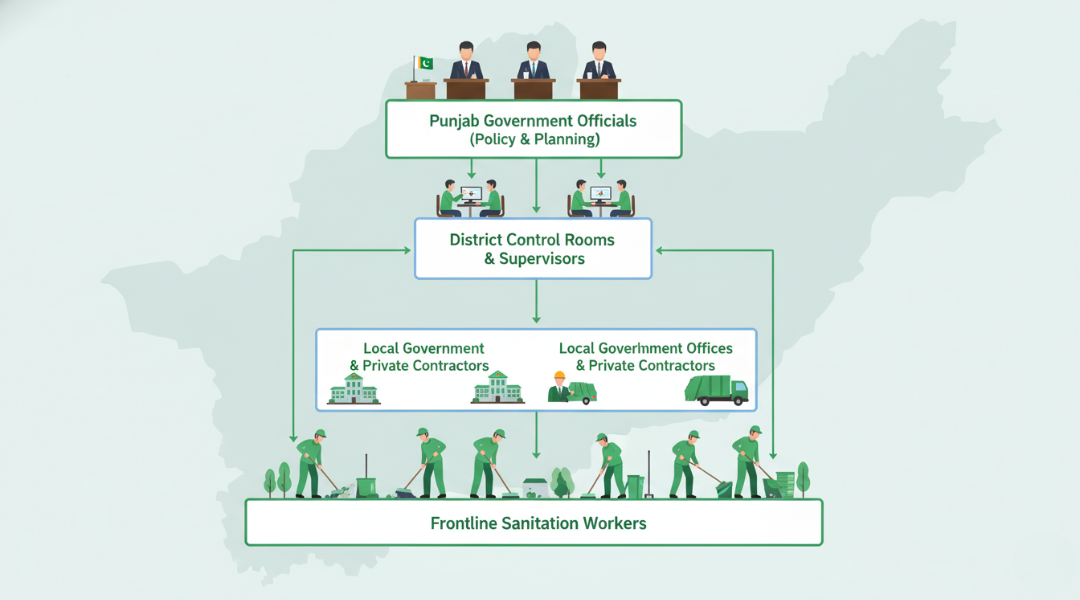
Instead of one central company, the system is built on multiple public private partnership (PPP) contracts. Each contract covers a group of tehsils or a city cluster and spells out exactly who supplies vehicles, machinery, staff and daily operations.
- Province level: Policy, budget, standards and overall supervision.
- Division / district level: Regional control rooms, inspections and support.
- Tehsil / local government level: Direct coordination with private operators and communities.
- Neighborhood level: Sanitation workers, route in-charges and supervisors handling day to day work.
سادہ لفظوں میں، اوپر کی سطح پر حکومت پالیسی، بجٹ اور معیار طے کرتی ہے، درمیانی سطح پر افسران نگرانی کرتے ہیں اور نیچے والی سطح پر نجی کمپنیاں اور صفائی عملہ روزمرہ کام سنبھالتے ہیں۔
2. Governance Framework | حکمرانی کا نظام
Governance of Suthra Punjab is built around clear separation of roles between the Government of Punjab and private operators. The Chief Minister gives political direction, while the Chief Secretary and senior officials align departments and field administration with the program’s targets.
Key governance layers
- Political leadership: Chief Minister and cabinet approve budget, scale and provincial targets, including zero visible waste and expansion to all districts.
- Administrative leadership: Chief Secretary and Local Government Department translate these targets into rules, notifications and implementation plans.
- Suthra Punjab Authority: A dedicated authority has been approved to centralize oversight, set service standards, monitor dumping sites and promote pollution control and tree plantation.
- Local governments: Mayors, chairpersons and tehsil administrations coordinate with contractors, resolve local issues and support community outreach.
- Private operators: Companies deliver services under concession contracts, subject to strict KPIs and monitoring.
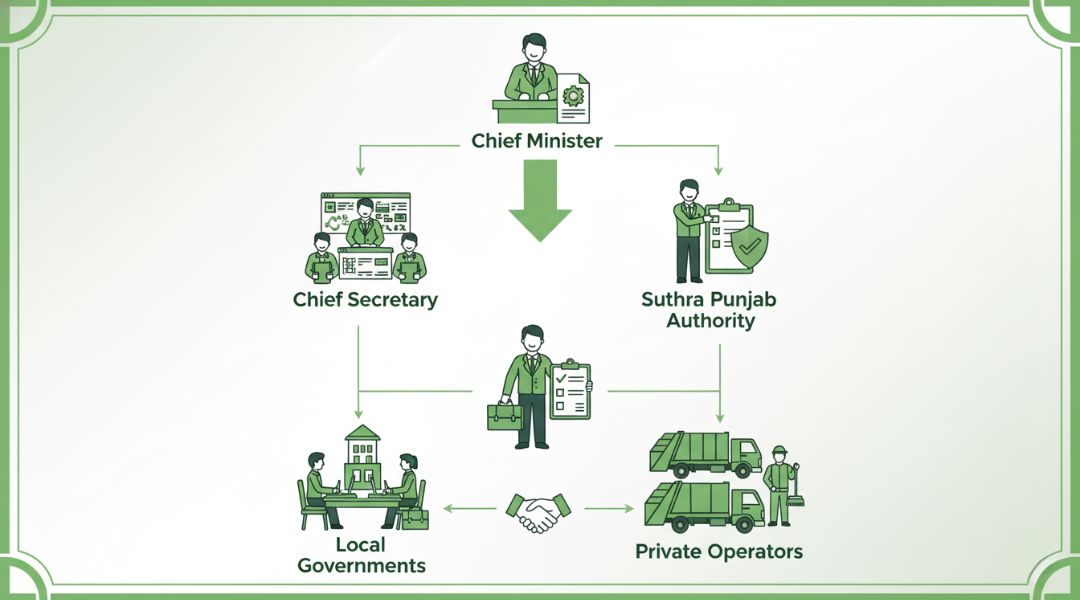
اس ماڈل میں پالیسی اور اختیار حکومت کے پاس رہتا ہے، جبکہ روزمرہ آپریشنز نجی کمپنیوں کے سپرد ہوتے ہیں۔ کارکردگی کو کی پی آئیز کے ذریعے ناپا جاتا ہے اور معاہدوں میں سزاء اور جزا دونوں شامل ہوتے ہیں۔
3. Public Private Partnership Model | پبلک پرائیویٹ پارٹنرشپ ماڈل
Suthra Punjab runs on multi-year, bankable PPP contracts. Under these agreements, private companies commit to provide vehicles, machinery, workshops, fuel, uniforms and staff in return for performance-linked payments from the government.

How the PPP model works
- Contract tenure: Usually around four years, long enough to justify investment in vehicles and infrastructure.
- Risk sharing: Operational risks such as fuel prices, maintenance and staffing sit mainly with the company. Policy risk and tariff changes sit with the government.
- Financial safeguards: Contracts include mobilization advances, performance guarantees and retention money to protect the public interest.
- Payment linked to KPIs: Monthly payments are tied to route coverage, cleanliness scores, complaint response times and worker attendance.
پی پی پی ماڈل کا فائدہ یہ ہے کہ حکومت کو ہر نئی گاڑی اور مشین خود نہیں خریدنی پڑتی، جبکہ کمزوری یہ ہو سکتی ہے کہ اگر نگرانی کمزور ہو تو کمپنیاں اخراجات بچانے کے لیے معیار گرا دیں۔ حل مضبوط مانیٹرنگ، شفاف ٹینڈرز اور کارکردگی پر مبنی ادائیگی ہے۔
4. Digital Governance, Control Rooms And KPIs | ڈیجیٹل مانیٹرنگ اور کنٹرول روم
Suthra Punjab uses digital tools to reduce manual discretion. Official descriptions mention GPS tracked fleets, electronic billing, public dashboards, control rooms at multiple levels and mobile apps for complaints.
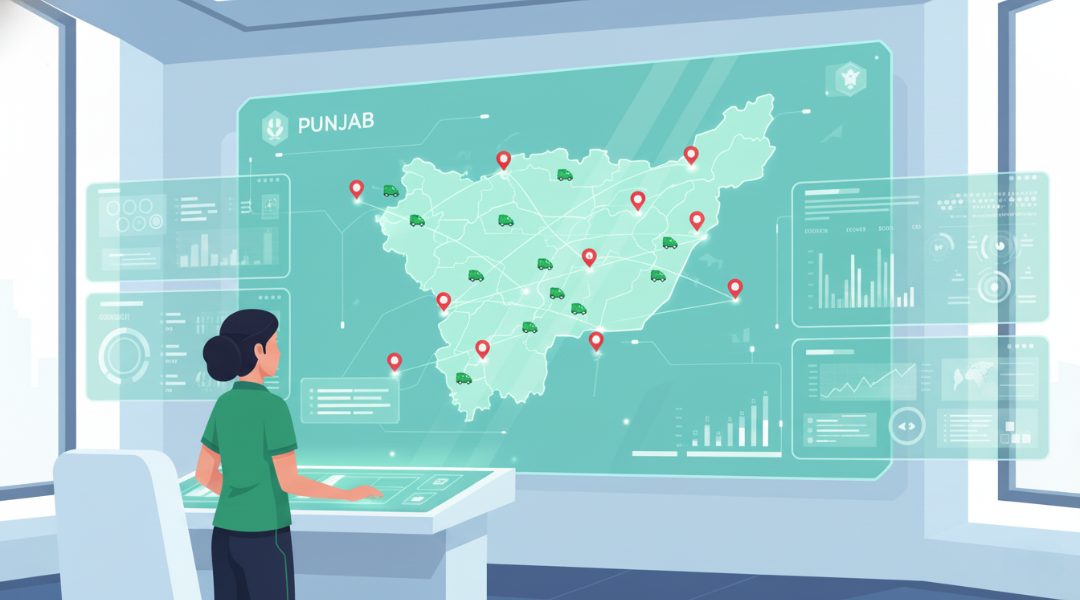
Core digital systems
- Control rooms: Set up at provincial, divisional, district and tehsil level to monitor routes, receive complaints and coordinate quick responses.
- GPS and telemetry: Tracking of vehicles and sometimes hand-held devices so that skipped streets and idle time can be flagged.
- Shehri mobile app and 1139 helpline: Citizens can report uncollected waste, overflowing containers and illegal dumping, and can upload photos as proof.
- Attendance and HR systems: Digital attendance for sanitation staff to reduce ghost workers and improve wage transparency.
- KPIs on dashboards: Collection coverage, number of complaints, resolution time, landfill use and recycling data feed into dashboards and reports.
صحیح طریقے سے چلنے کی صورت میں یہ سسٹم کرپشن اور لاپرواہی کو کم کر سکتے ہیں، لیکن شرط یہ ہے کہ ڈیٹا واقعی استعمال ہو، رپورٹیں آن لائن دستیاب ہوں اور شکایت کرنے والے شہریوں کو جواب بھی ملے۔
5. Scale, Statistics And Achievements | حجم، اعداد و شمار اور کامیابیاں
Governance only matters if it delivers results on the ground. Public data and independent reports highlight the scale of Suthra Punjab and some early achievements.
- Operations designed to cover 40 districts, about 141 tehsils and more than 220 local governments.
- Procurement of over 21,000 cleaning machines and thousands of vehicles and loader rickshaws for collection and street sweeping.
- Allocation of roughly Rs 120 billion in the 2024–25 budget to support the program and related infrastructure.
- Creation of over 100,000 green jobs in sanitation and related services, with a notable share for women and youth.
- Rapid clearance of festival waste and major clean-up operations in big cities during events such as Eid-ul-Adha.
یہ اعداد و شمار ظاہر کرتے ہیں کہ ستھرا پنجاب صرف کاغذی پلان نہیں بلکہ حقیقی مشینری، گاڑیوں اور ہزاروں ملازمین پر مشتمل بڑا نظام ہے، جو روزانہ کی بنیاد پر کام کرتا ہے۔
6. Roles Of Key Stakeholders | اہم اسٹیک ہولڈرز کے کردار
Understanding who does what is essential if citizens want to push for better performance.
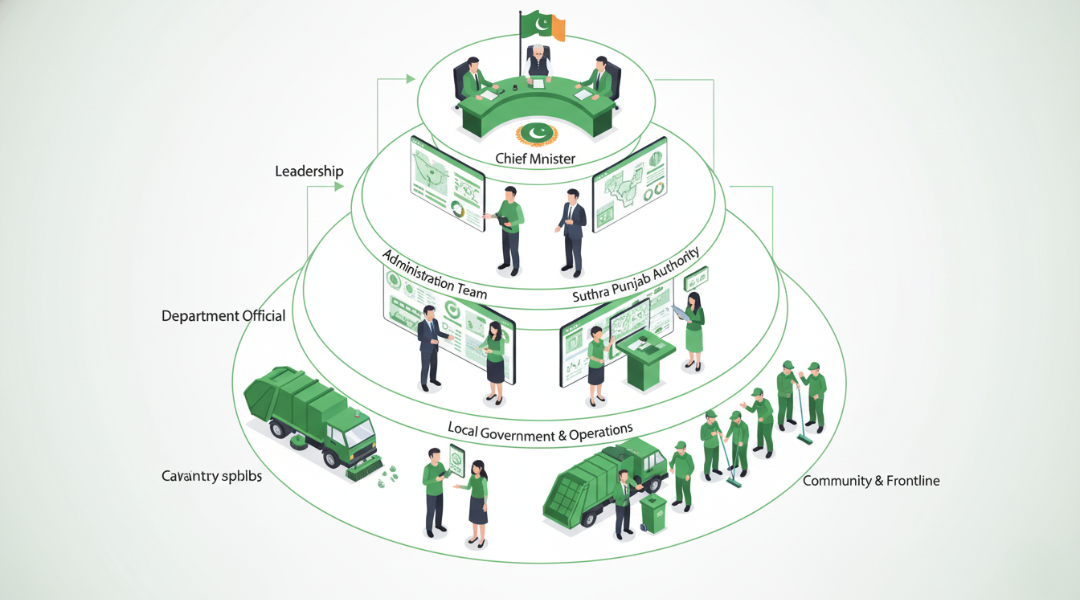
Chief Minister & Cabinet
Approve scope, budget and expansion, set political priorities and respond to major performance failures.
Chief Secretary & Departments
Coordinate local governments, planning, finance and environment departments, and review reports from control rooms and authorities.
Suthra Punjab Authority
Sets operational standards, supervises contracts, monitors dumping sites and leads pollution control and plantation components.
Local Governments
Work with contractors, resolve local issues, support awareness campaigns and escalate persistent problems to higher levels.
Private Companies
Provide staff, vehicles and machinery, meet KPIs, maintain assets and respond to complaints within agreed time limits.
Citizens & Workers
Citizens report problems and follow disposal rules. Sanitation workers execute front-line tasks and are the face of the program in every street.
جب مسئلہ مستقل رہے تو صرف صفائی عملے کو الزام دینے کے بجائے یہ سمجھنا ضروری ہے کہ کن سطحوں پر فیصلہ سازی ہوتی ہے اور کن عہدیداروں سے سوال پوچھا جا سکتا ہے۔
7. Governance Challenges And Risks | گورننس کے مسائل اور رسک
Despite the scale of investment, reports from some districts point to serious challenges including mismanagement, delayed salaries for workers, weak monitoring and allegations of corruption and collusion between officials and contractors.
Common governance problems
- Uneven service quality between model cities and smaller or remote tehsils.
- Contract enforcement that is sometimes slow or politically influenced.
- Complaints about non-payment of wages to sanitation workers in certain areas.
- Accusations of overbilling, under-deployment of machinery or ghost workers.
- Limited public access to detailed performance and contract data.
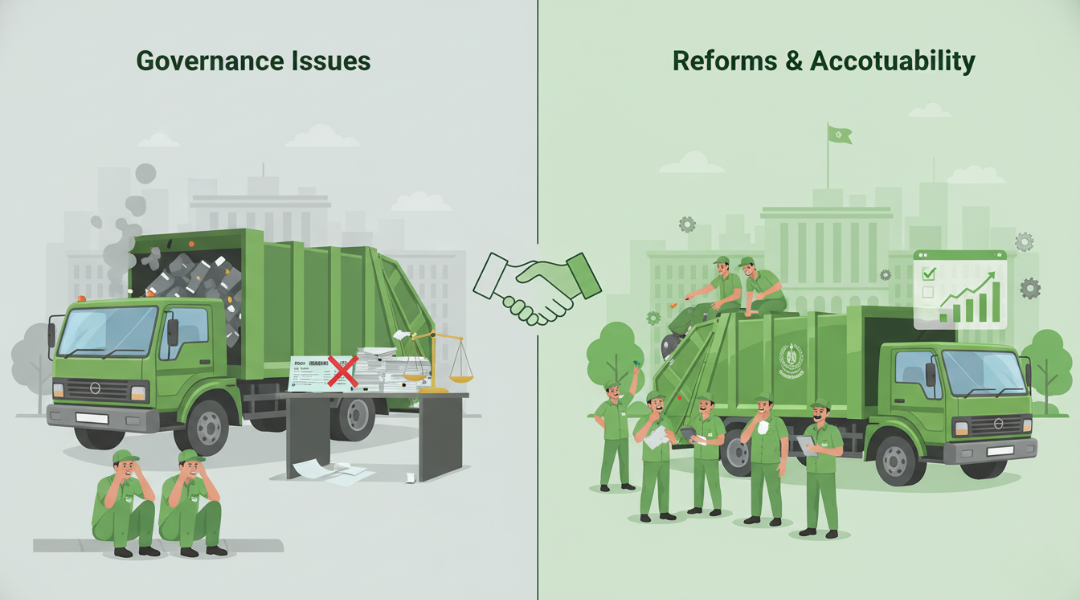
What the system must do to fix this
- Publish KPIs, complaint statistics and contractor performance summaries for every tehsil.
- Carry out independent third-party audits of routes, landfill sites and financial flows.
- Use the Shehri app, helpline and local committees to verify that services actually reach each neighborhood.
- Enforce penalties, including termination of underperforming contracts where required.
- Ensure timely and transparent payment of wages and safety equipment for sanitation staff.
خلاصہ یہ کہ پروگرام کا ڈھانچہ مضبوط ہے، مگر اس کو صحیح چلانے کے لیے شفافیت، آزاد آڈٹ اور شہریوں کی مستقل نگرانی ضروری ہے۔ صرف مشینری اور بجٹ کافی نہیں۔
8. How Citizens Can Use This Structure For Accountability | شہریوں کا کردار
Knowing the governance structure helps residents push for better service in a smart way. Instead of general complaints, citizens can target the right level with the right demand.
- Use the Shehri app or helpline first and keep complaint numbers and photos.
- Escalate persistent issues to tehsil and district control rooms with evidence.
- Raise systemic issues like non-payment of wages, broken machinery or illegal dumping with local representatives.
- Ask for public sharing of KPI dashboards, contract summaries and landfill monitoring reports.
- Support workers’ safety and dignity while demanding clean, reliable service.
مؤثر احتساب اسی وقت ممکن ہے جب شہری نظام کو سمجھیں، صحیح فورم پر بات کریں اور مسلسل فالو اپ کریں۔ یہی صفائی، شفافیت اور بہتر گورننس کی بنیاد بن سکتا ہے۔
9. About This Governance Guide | اس گائیڈ کے بارے میں
This page brings together information from official portals, government announcements and independent analyses to explain how Suthra Punjab is structured and governed. It is meant to help citizens, journalists and researchers understand both the strengths of the model and the areas where tighter governance is still needed.
For official services like Suthra Punjab login, complaints or job applications, always use the government’s own portals and channels.